


Procurement has quietly become one of the most strategically important functions in modern enterprise. The vendors an organization chooses to work with — and the rigor with which it evaluates them — directly affects product quality, operational risk, cost efficiency, and ultimately competitive position. At the center of that evaluation process sits the Request for Information, or RFI: a structured document issued to potential vendors to gather the intelligence needed to make informed sourcing decisions.
When the RFI process works well, it produces clean, comparable data that accelerates decision-making and reduces risk. When it works poorly, it creates administrative chaos — incomplete responses, inconsistent formats, missed deadlines, and information buried across dozens of spreadsheets and email threads that no one can synthesize clearly.
The difference between these two outcomes increasingly comes down to whether the organization has the right tools in place. Purpose-built software for managing the RFI process is no longer a luxury reserved for large enterprise procurement teams. It is becoming a practical necessity for any organization that issues RFIs with meaningful frequency and needs the results to drive sound decisions.
But not all solutions are created equal, and choosing the wrong platform creates its own set of problems. This article examines the features that genuinely matter when evaluating RFI software — and the questions procurement leaders should ask before making a decision.
Understanding the RFI’s Role in Procurement
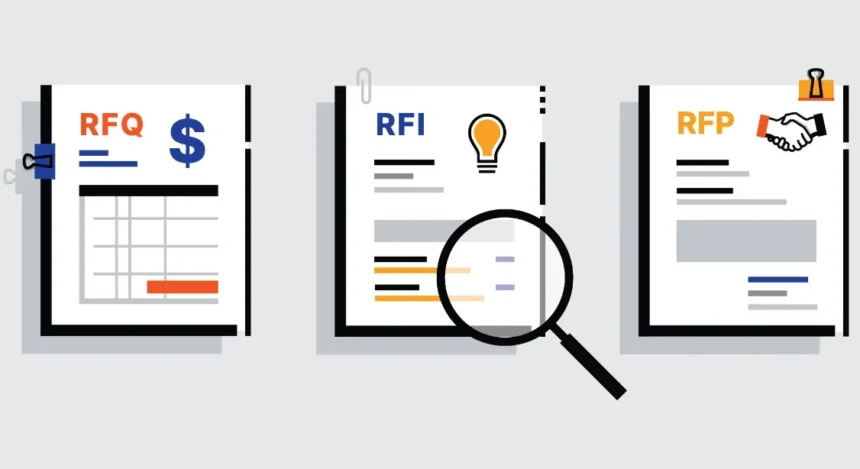
Before diving into software features, it helps to be precise about what the RFI is trying to accomplish. Unlike an RFP, which is issued to vendors you have already qualified and asks them to propose a specific solution at a specific price, the RFI is a pre-qualification tool. Its purpose is to gather structured market intelligence: understanding who the relevant vendors are, what their capabilities look like, how they differ from one another, and which ones merit further evaluation.
This distinction matters for software selection because it defines what the platform needs to do well. RFI management is fundamentally an information gathering and comparison exercise. The platform needs to make it easy to design clear, structured questions, distribute them efficiently to a defined vendor list, collect and organize responses consistently, and enable meaningful side-by-side comparison of what vendors have said.
Organizations that use general-purpose survey tools, email, or shared documents for this process quickly discover the limitations. Vendor responses arrive in inconsistent formats. Follow-up questions get lost in email threads. Comparison requires manually copying data into spreadsheets. Collaboration between procurement team members is fragmented. The intelligence gathered is real, but extracting usable insights from it is far harder than it needs to be.
The Core Features That Distinguish Effective Platforms
When evaluating RFI software, the starting point is a clear-eyed assessment of the core functional capabilities that determine whether the platform will actually improve your process — or simply digitize its existing inefficiencies.
Structured questionnaire design. The most fundamental capability of any RFI platform is the ability to design well-structured, professional questionnaires without requiring technical expertise. Look for platforms that offer a range of question types — multiple choice, scoring scales, free text, file upload, table-based responses — and that make it easy to organize questions into logical sections. The ability to apply conditional logic, where certain questions appear only based on earlier answers, is a significant advantage for complex RFIs that cover multiple product categories or service areas.
Templates are equally important. A platform that ships with industry-relevant RFI templates, or that makes it easy to build and save your own, dramatically reduces the setup time for new initiatives. Over time, a library of well-designed templates becomes a genuine organizational asset.
Vendor portal and response management. The vendor experience on the receiving end matters more than many procurement teams realize. When vendors find the response process confusing, technically frustrating, or time-consuming, response quality suffers. The best platforms provide vendors with a clean, intuitive portal where they can view questions, save progress, upload supporting documents, and submit completed responses without needing technical support.
From the procurement side, look for real-time visibility into response status — knowing which vendors have opened the questionnaire, which are in progress, and which have submitted — so you can follow up proactively rather than chasing responses as the deadline approaches.
Side-by-side comparison and scoring. This is where many platforms that handle the collection side adequately fall short on the analysis side. The purpose of an RFI is to generate comparative intelligence, and the platform should make comparison genuinely easy. Look for built-in scoring frameworks that allow evaluators to weight different criteria and score vendor responses against a consistent rubric. Side-by-side comparison views that display multiple vendors’ answers to the same question simultaneously are essential for efficient analysis.
Automated scoring aggregation — where the platform calculates weighted scores based on evaluator inputs and ranks vendors accordingly — saves significant time and reduces the risk of arithmetic errors in spreadsheet-based scoring. The ability to filter and sort vendors by score, by category, or by specific response characteristics gives procurement teams the analytical flexibility to slice the data in ways that match their decision-making process.
Collaboration and workflow management. RFI evaluation is rarely a solo activity. Multiple stakeholders — procurement leads, technical evaluators, legal reviewers, business unit owners — typically need to review and score different aspects of vendor responses. A platform that supports role-based access, parallel review workflows, and comment threads within the evaluation environment dramatically reduces the coordination overhead of managing multi-stakeholder evaluations.
Look also for audit trail capabilities. In regulated industries or large organizations where procurement decisions face internal or external scrutiny, the ability to document who evaluated what, when, and with what rationale is not optional — it is a compliance requirement.
Integration with existing procurement systems. No software platform operates in isolation, and RFI tools are no exception. The most valuable platforms integrate cleanly with the broader procurement technology ecosystem: ERP systems, vendor management platforms, contract lifecycle management tools, and sourcing suites. When RFI data flows automatically into downstream systems rather than requiring manual export and re-entry, process efficiency improves and data quality is preserved.
API availability is a signal of platform maturity and integration-readiness. Platforms that offer robust APIs give procurement teams the flexibility to build custom integrations that fit their specific technology environment.
Features That Separate Good Platforms from Great Ones
Beyond the core functional requirements, a handful of more advanced capabilities distinguish the platforms that genuinely transform procurement outcomes from those that merely digitize existing workflows.
AI-assisted analysis. The volume of text generated in a comprehensive RFI process — thousands of words of vendor responses across dozens of questions — creates a real analytical challenge. AI capabilities that summarize vendor responses, flag inconsistencies or gaps, identify patterns across responses, and surface the most relevant information for each evaluation criterion significantly accelerate the analysis phase. This is particularly valuable when evaluating a large vendor pool or when procurement teams are operating under tight timelines.
Customizable weighting and scoring models. Different procurement decisions require different evaluation frameworks. A platform that offers flexible, customizable scoring models — where evaluators can define the relative importance of different criteria, set thresholds that automatically flag vendors who do not meet minimum requirements, and adjust weighting across evaluation dimensions — gives procurement teams the analytical precision their decisions deserve.
Reporting and export capabilities. At the conclusion of an RFI process, procurement leaders typically need to present findings to executive stakeholders and justify shortlisting decisions. Platforms that generate professional, visually clear summary reports — showing vendor scores, comparative highlights, and evaluation rationale — save significant preparation time and ensure that the intelligence gathered in the process is communicated effectively.
Export flexibility also matters. The ability to export RFI data in multiple formats — structured data exports for further analysis, formatted PDFs for stakeholder distribution, raw response archives for record-keeping — ensures that the platform integrates into existing reporting and documentation workflows rather than creating new ones.
Security and compliance architecture. RFI processes often involve the exchange of sensitive commercial and technical information. The platform’s security architecture should match the sensitivity of that information. Look for enterprise-grade access controls, data encryption at rest and in transit, Single Sign-On (SSO) support, and compliance with relevant data protection standards. For organizations operating in regulated industries, the ability to demonstrate that vendor data is handled in compliance with applicable regulations is a procurement requirement, not a feature preference.
Common Selection Mistakes to Avoid
Having a clear feature checklist is necessary but not sufficient for making a good platform decision. Several common selection mistakes can lead organizations to choose platforms that look good in demonstrations but fail in practice.
Prioritizing features over usability. A platform packed with advanced capabilities that your team struggles to use effectively will deliver worse outcomes than a simpler platform used consistently and well. Evaluate usability seriously during the selection process — require hands-on trials with actual team members, not just demonstrations led by vendor sales engineers.
Underestimating implementation complexity. Platforms that require extensive configuration, custom development, or data migration before they deliver value create risk. Assess honestly how long it will take to get the platform to a point where it improves rather than complicates your existing process, and factor that timeline into your decision.
Neglecting vendor support quality. RFI processes are often time-sensitive. When something goes wrong with the platform during an active initiative, the quality and responsiveness of vendor support can determine whether the process recovers cleanly or becomes a crisis. Assess support quality before you sign, not after.
Evaluating Fit for Your Organization’s Specific Context
The right RFI software for your organization depends on factors that are specific to your context: the volume and complexity of your RFI activity, the size and structure of your procurement team, the sophistication of your existing technology stack, and the regulatory environment you operate in.
Small procurement teams running a handful of RFIs per year have fundamentally different needs than enterprise teams managing dozens of concurrent sourcing initiatives across multiple business units and geographies. The former may prioritize simplicity and ease of use above all else. The latter may require advanced workflow management, multi-entity support, and deep integration capabilities.
Before beginning any platform evaluation, document your actual requirements clearly — not just the features you think you need, but the specific problems you are trying to solve and the outcomes you are trying to achieve. Let those requirements drive your evaluation criteria rather than letting vendor marketing define what good looks like.
Conclusion
The RFI is one of procurement’s most powerful tools for managing vendor risk, gathering market intelligence, and making sourcing decisions that hold up under scrutiny. But the quality of the intelligence it generates is only as good as the process used to collect and analyze it — and that process depends increasingly on having the right software foundation in place.
Choosing that foundation thoughtfully — evaluating platforms against a clear set of functional requirements, assessing usability and integration fit honestly, and aligning the decision to your organization’s specific context — is the work that separates procurement teams that consistently make great sourcing decisions from those that struggle to translate RFI effort into actionable insight.
In procurement as in most things, the right tools do not guarantee excellence. But they create the conditions under which excellence becomes possible.